
Rare Louis XVI Mirror with Revolutionary Bonnet Rouge Crest, c.1790
The mirror to celebrate Liberty
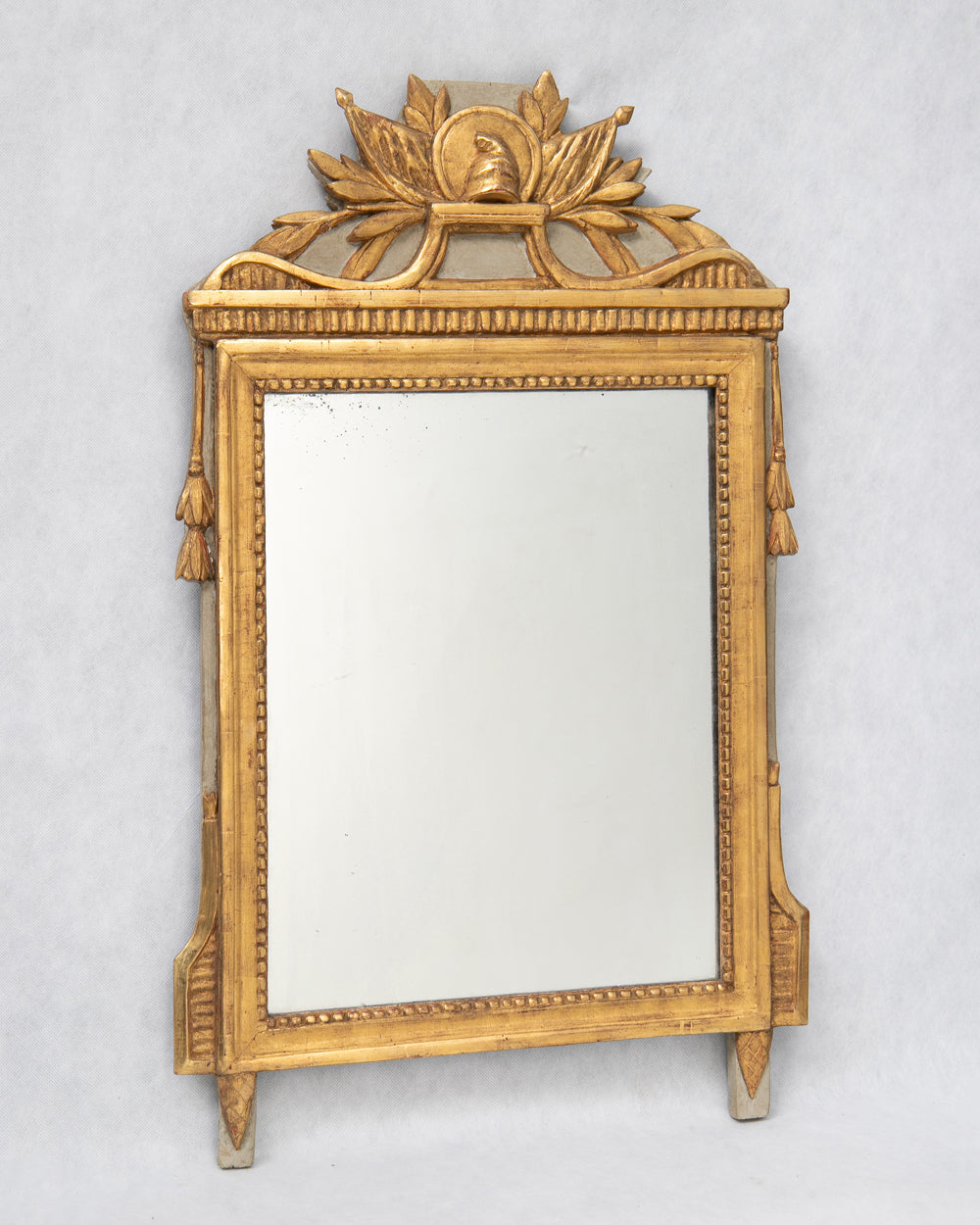
This is a fascinating Louis XVI style mirror. But the first question is: what exactly are we looking at here? A tiny hat belonging to a dwarf? A curious piece of textile carved into wood? Or something much more intriguing?
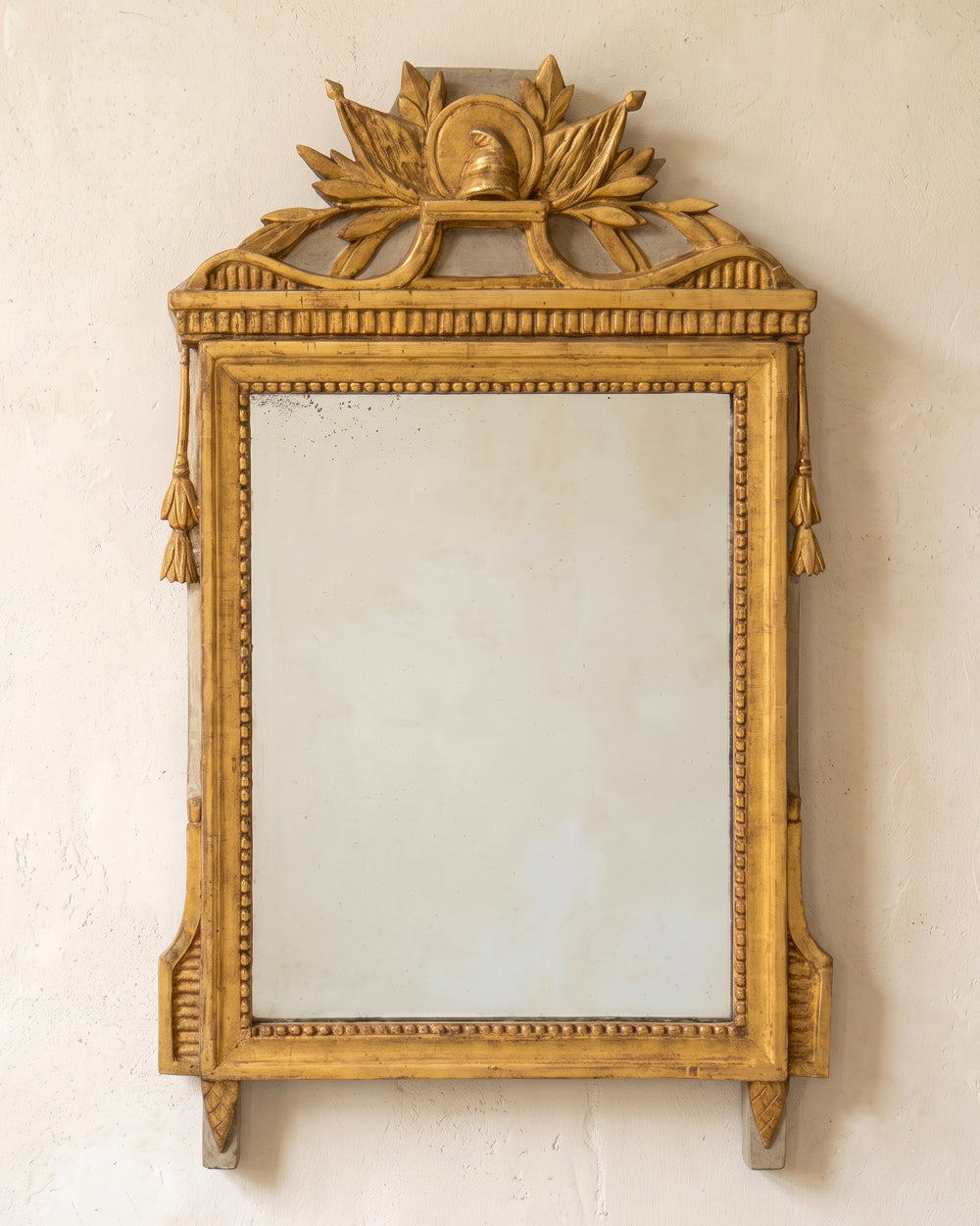
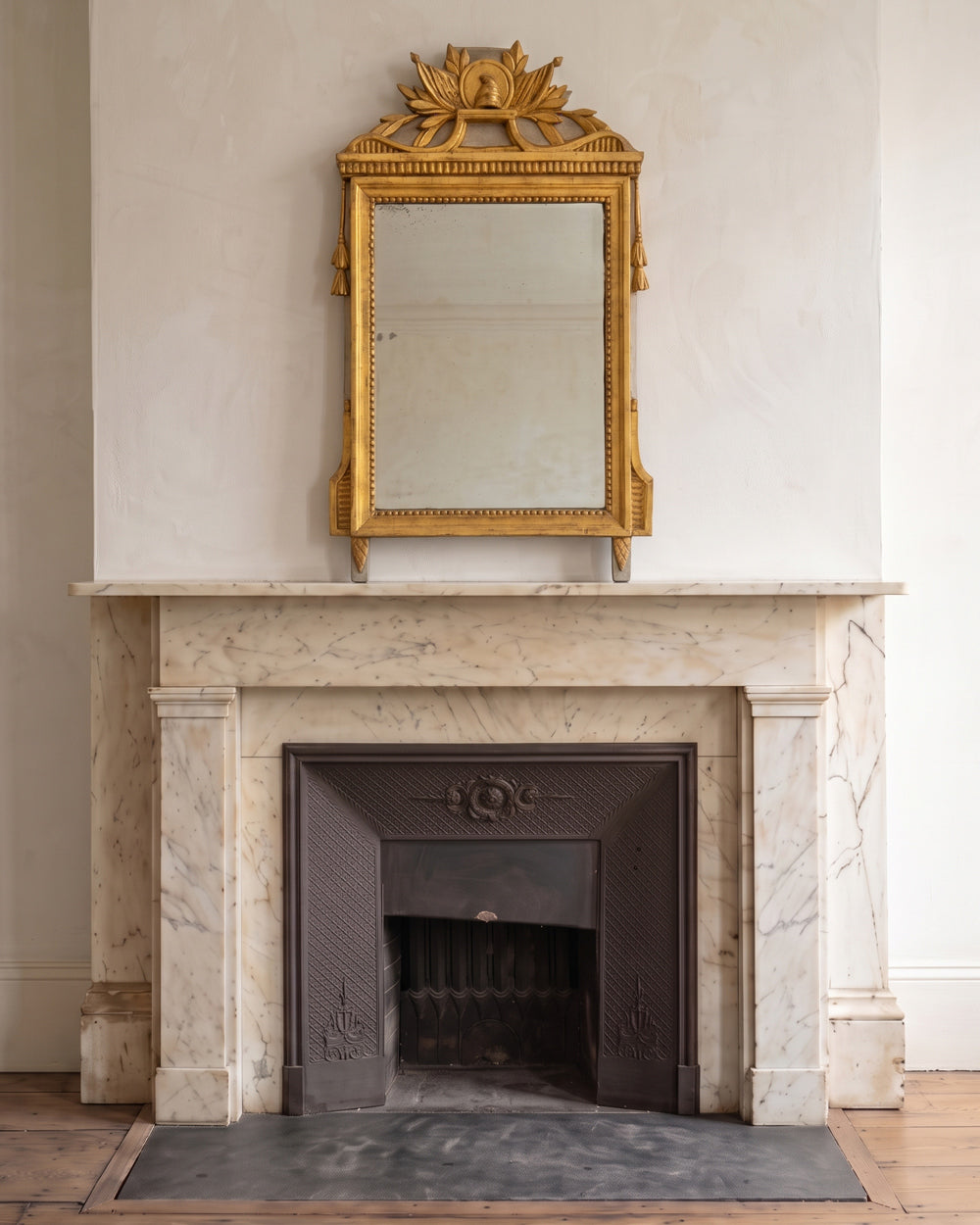
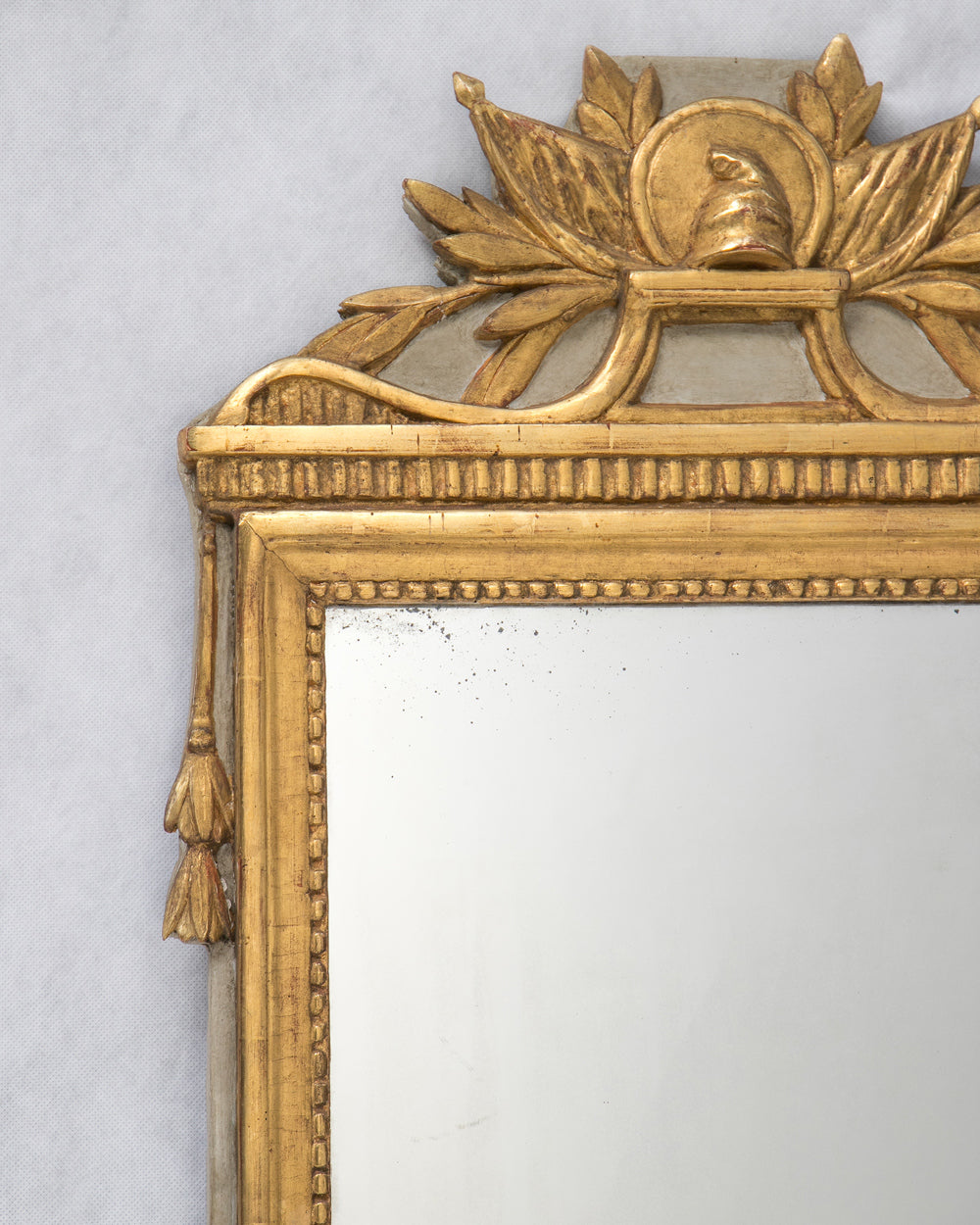
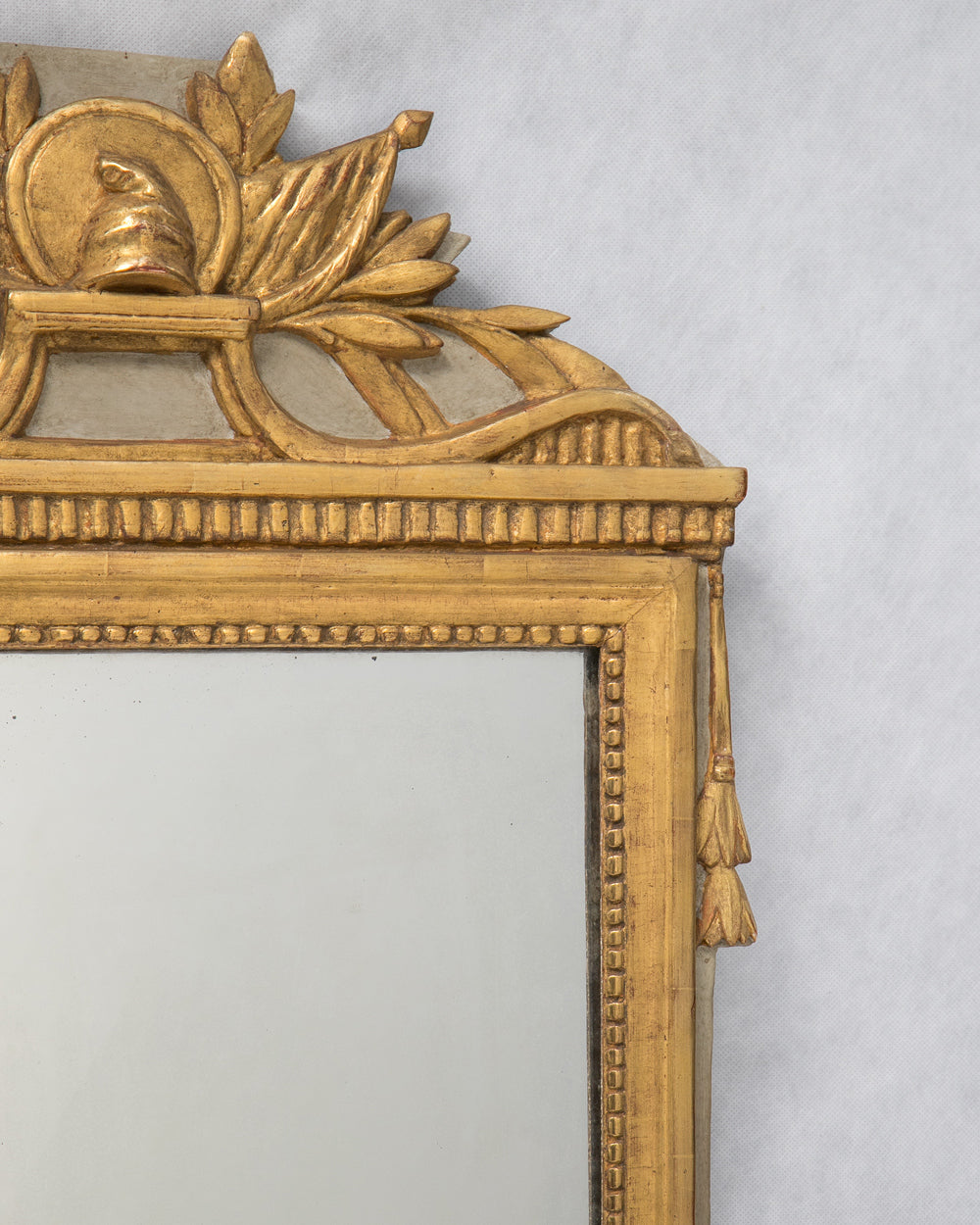
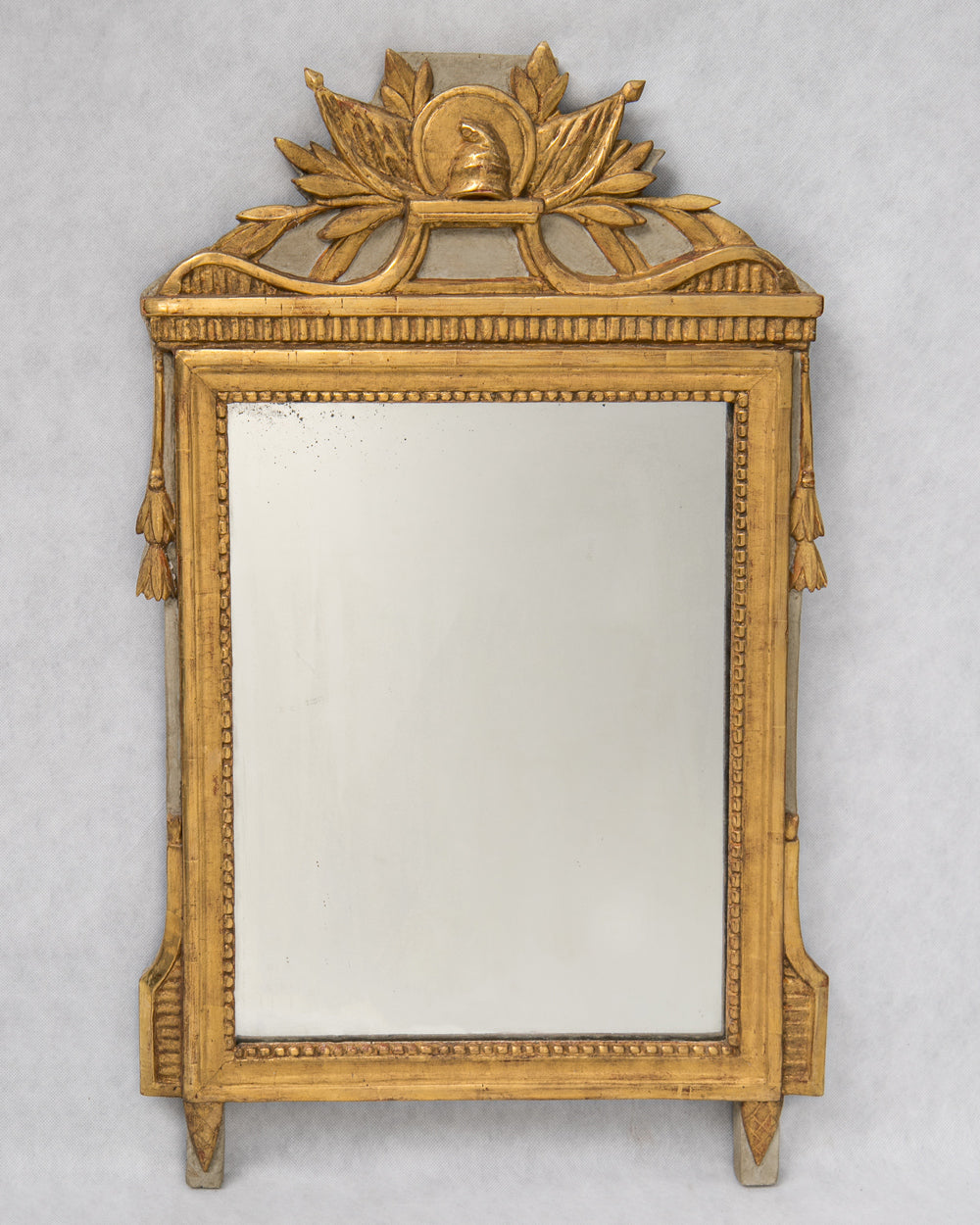
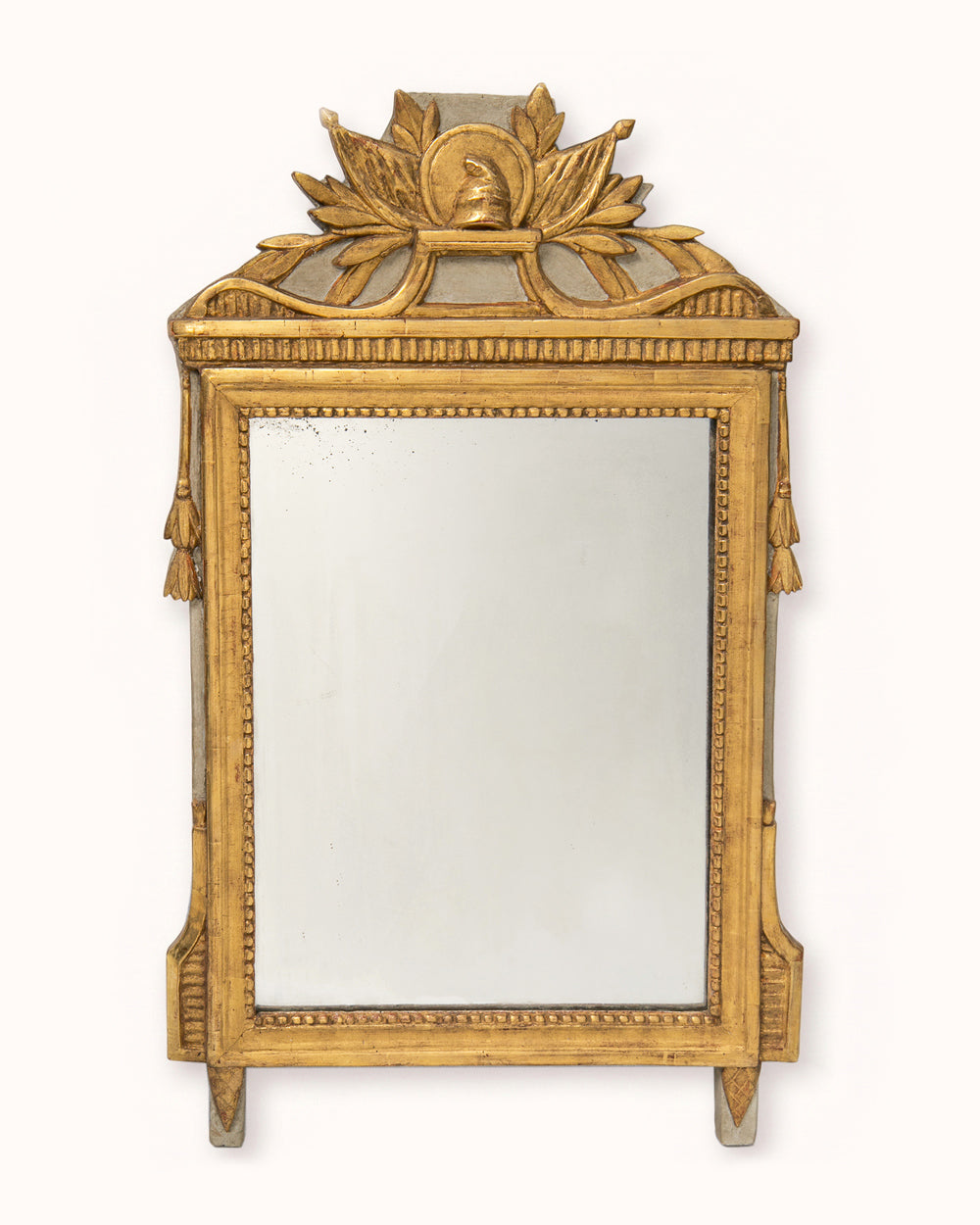
At first glance, the mirror appears to be a textbook example of elegant Louis XVI neoclassicism. The composition has all the familiar ingredients: laurel branches, draped swags, bead-and-reel moulding and those charming little hanging husks. Everything points towards the refined world of circa 1780-1800.
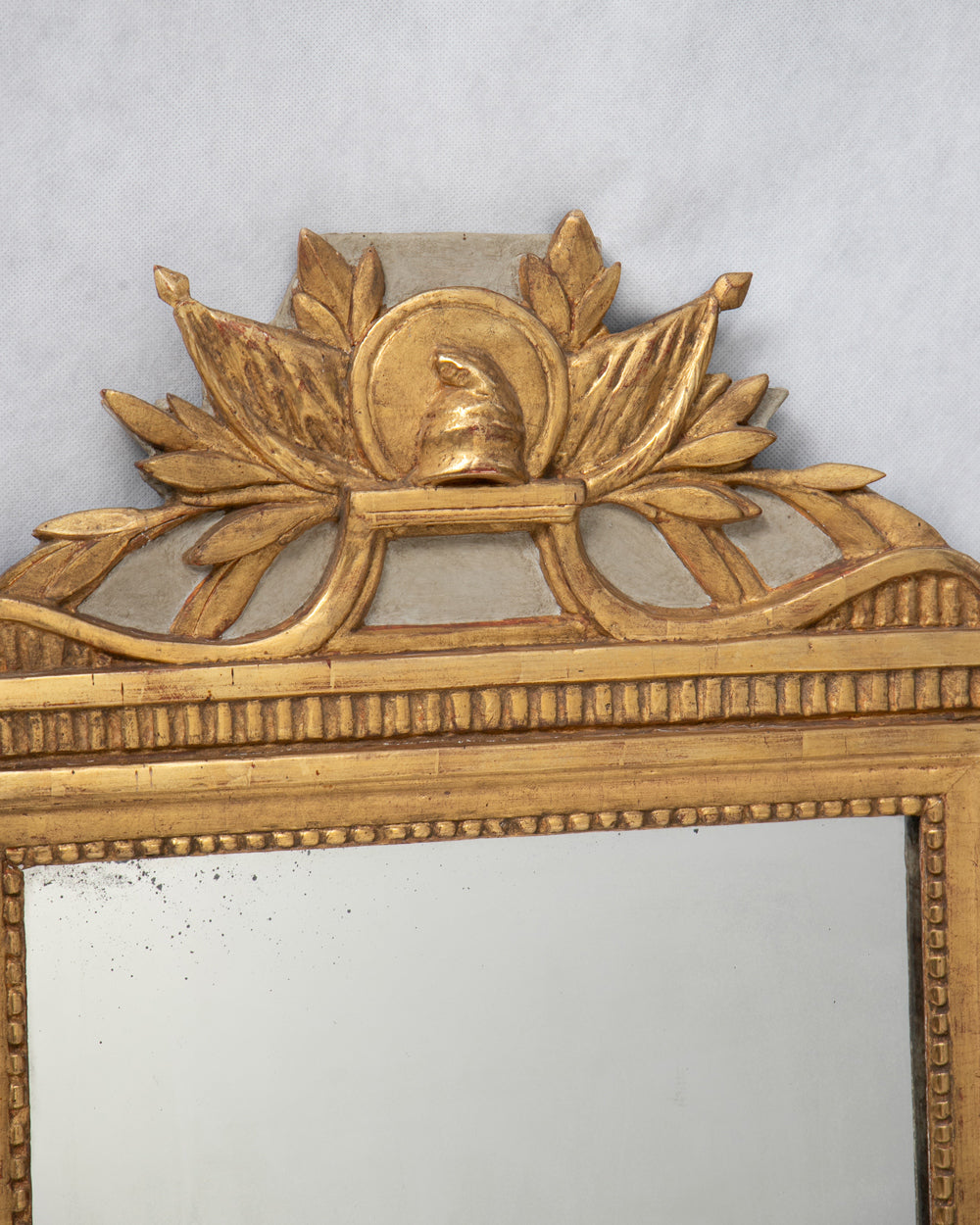
But then your eye travels upwards. The circular medallion at the centre of the crest is unusual. Very unusual. It does not show the expected flaming urn, lyre, quiver, wreath or classical trophy found on countless Louis XVI mirrors. Instead, it appears to depict a soft, folded cap with a slightly bent tip.
Look closer and the mystery begins to unravel. This is most likely a Phrygian cap, also known as the Bonnet Rouge, one of the most recognisable symbols of the French Revolution.
And suddenly this mirror becomes much more than a beautiful decorative object. It becomes a small historical witness to one of France’s most turbulent decades.
The Louis XVI Style
The Louis XVI style did not simply vanish when Louis XVI lost his throne. Decorative styles rarely obey political calendars. The elegant neoclassical language of straight lines, ribbons, laurel wreaths and classical ornament remained enormously popular throughout the Revolutionary period. Craftsmen did not throw away their pattern books in 1789. They adapted them.
(Think of it as a very elegant eighteenth-century version of changing the branding while keeping the beautiful old design underneath.)
Dangerous Decorations
After the Revolution, royal symbols became complicated. Crowns, fleur-de-lis and royal monograms could suddenly become dangerous decorations. Some were removed, altered or hidden. In their place appeared new symbols representing the changing times: laurel wreaths, oak leaves, civic trophies and, most famously, the Phrygian cap.
The Bonnet Rouge had a long history before becoming the emblem of the Revolution. In ancient Rome, a similar cap was associated with freed slaves, making it a powerful symbol of liberty. During the French Revolution it became an image of freedom, equality and the rejection of absolute monarchy.
What makes this mirror so fascinating is that nothing about it feels revolutionary in an aggressive sense. The overall design remains graceful, symmetrical and unmistakably Louis XVI. The revolution is hidden in the details.
Instead of a royal crown or classical urn, the crest may quietly celebrate Liberty.
It is almost poetic: a mirror that kept its refined eighteenth-century elegance but changed its political wardrobe.
Could the mirror have been made after the Revolution? Quite possibly. A date around the 1790s or early Empire period would make perfect sense. One intriguing possibility is that a missing upper element once completed the composition. Perhaps a former owner, restorer or cleaner removed a more obviously royal or decorative element 150 years ago, leaving behind the mysterious Liberty cap we see today.
The Bonnet Rouge itself is not painted red, of course. The famous red cap is known from paintings, engravings and revolutionary clothing, but in carved wood, bronze or stone, the shape alone was enough to communicate the idea.
The way the wind blows
During this period, many craftsmen continued working for the same sophisticated clientele as before, although their clients suddenly had to be much more careful about appearing too aristocratic. A mirror like this almost seems to whisper: “I still love beautiful Louis XVI design… but I also understand the new world outside.”
Not propaganda. Not a political statement shouted from the walls. Just a subtle symbol showing that the owner understood which way the wind was blowing.
Mirror condition
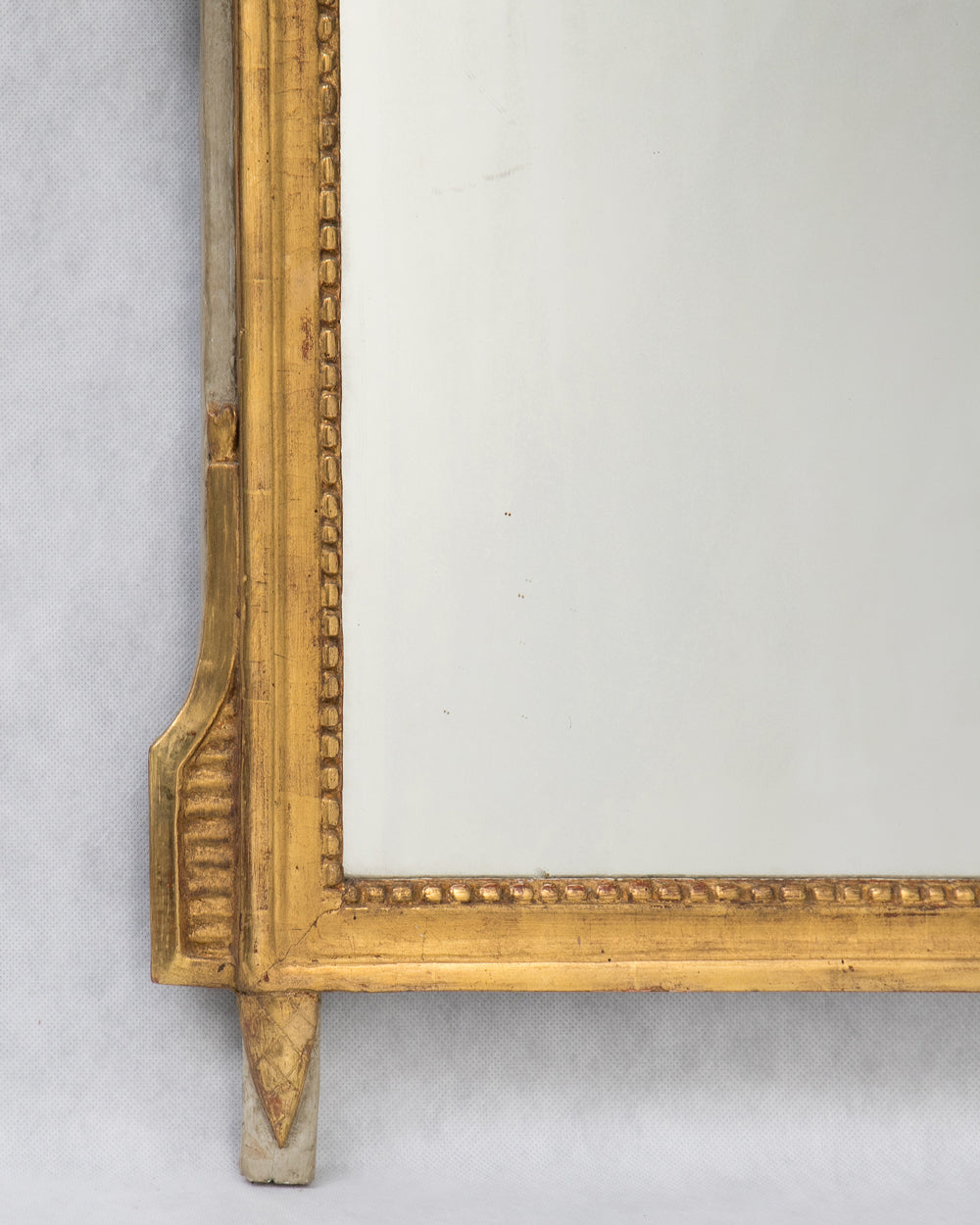
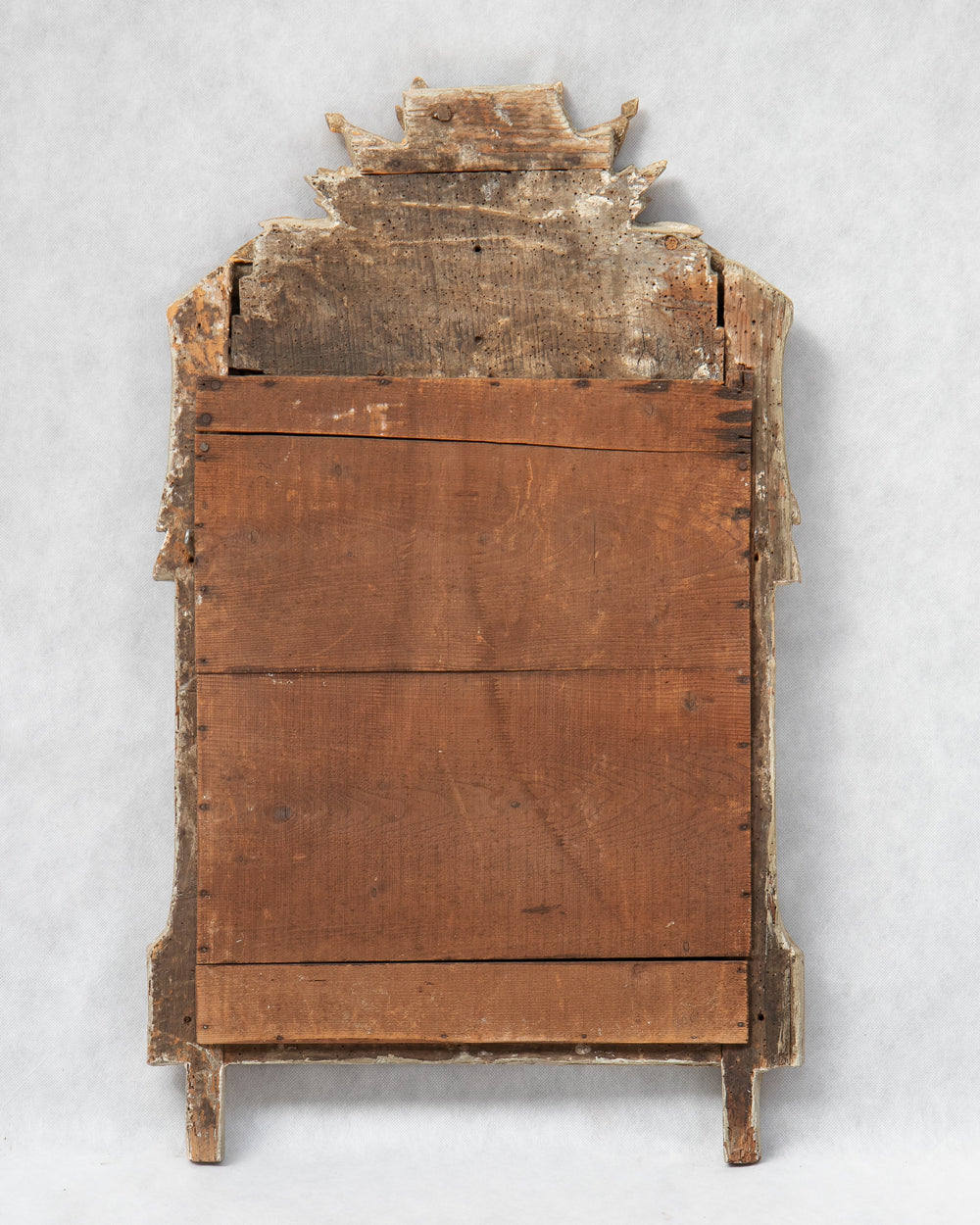
The mirror retains its original backboards and original mirror plate, which has developed only a few delicate foxed spots over time. The glass still provides a very clear reflection. The frame preserves its original water gilding, with subtle variations and gentle patina. Overall, the mirror remains in beautiful antique condition.
A beautiful object, but also a little historical puzzle: a mirror caught between two worlds, carrying the elegance of the Ancien Régime and the symbols of a changing France.
A Louis XVI mirror that may have quietly switched teams during the French Revolution.
Product info
TRANSPORT & DELIVERY
All household, small fine art, and vintage items are available for in-store pickup or can be shipped domestically and internationally. Shipping expenses will be included during the checkout process for standard shipping.
All our large and delicate antique and vintage items require custom delivery, which must be organised separately from the product purchase. We will of course organise the transport for you and help you with all your questions. We ship world-wide and have lots of experience with the transport of fragile items. All of our products are professionally packed, shipped and send via one of our partners. We will make sure we will always find the best custom solution for your transport. Feel free to reach out to us anytime for a quote on the delivery of any of our items to your home address.
Please also read our FAQs about shipping.
GENERAL CONDITION
Please keep in mind that in many cases we sell vintage and antique pieces. None of these pieces should be considered new or in perfect condition.
All of our vintage products show the rich beauty and history of their life with the knocks and bumps of many years of use. We restore our pieces so they will be clean and in a good working condition. However we try to minimise restoration to keep every piece as original as possible.
PHOTOGRAPHY
The physical object can differ slightly in colour from the object as presented online. We have made every effort to display colours accurately, but cannot guarantee that the pictures accurately reflect the colour of those goods in real life.
Returns
If you wish to cancel, simply contact us at info@wildschut-antiques.com or through your customer account. We will guide you through the return process with care and clarity.
Items should be returned in their original condition and securely packaged. Return shipping costs are the responsibility of the customer, unless otherwise agreed. Once the item has safely returned to us, we will process your refund promptly.
CONTACT
Don’t hesitate to contact us with any question you have. We are always happy to answer your questions and help to transport your antiques safely to your home.
Choose options