






Giltwood Console with Pink Marble Top and Hoof Feet, 18th Century
Hooves. Heft. Heaven
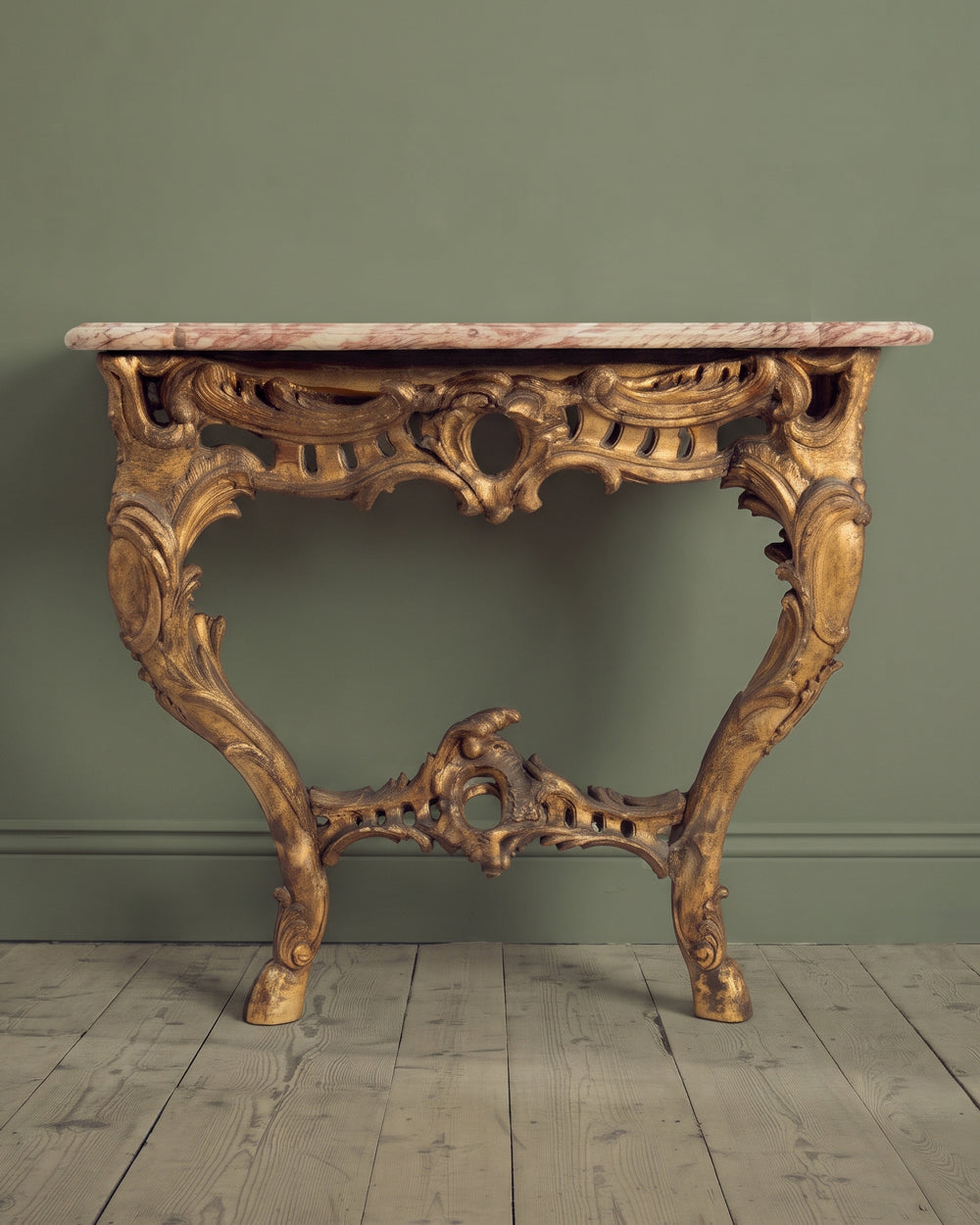
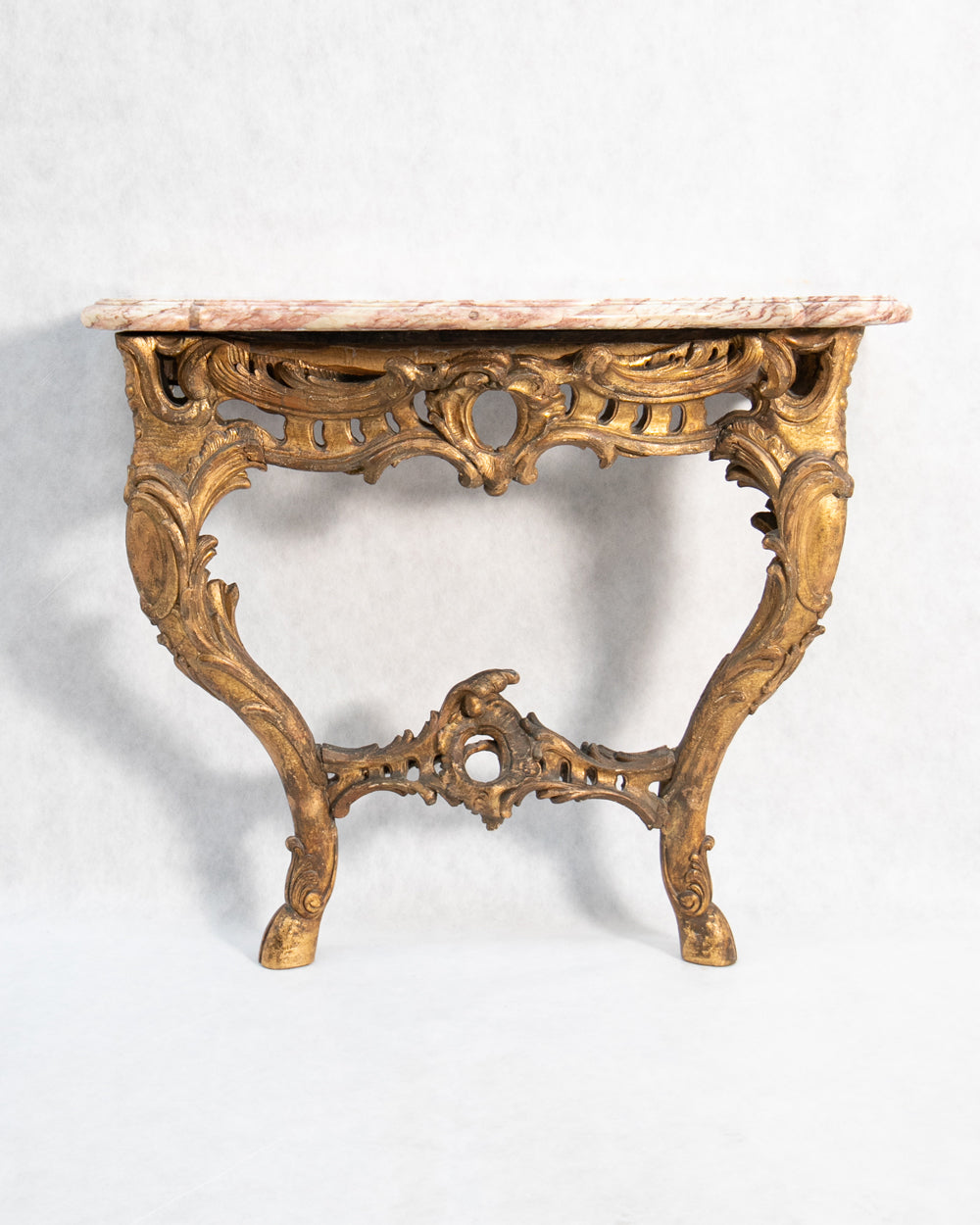
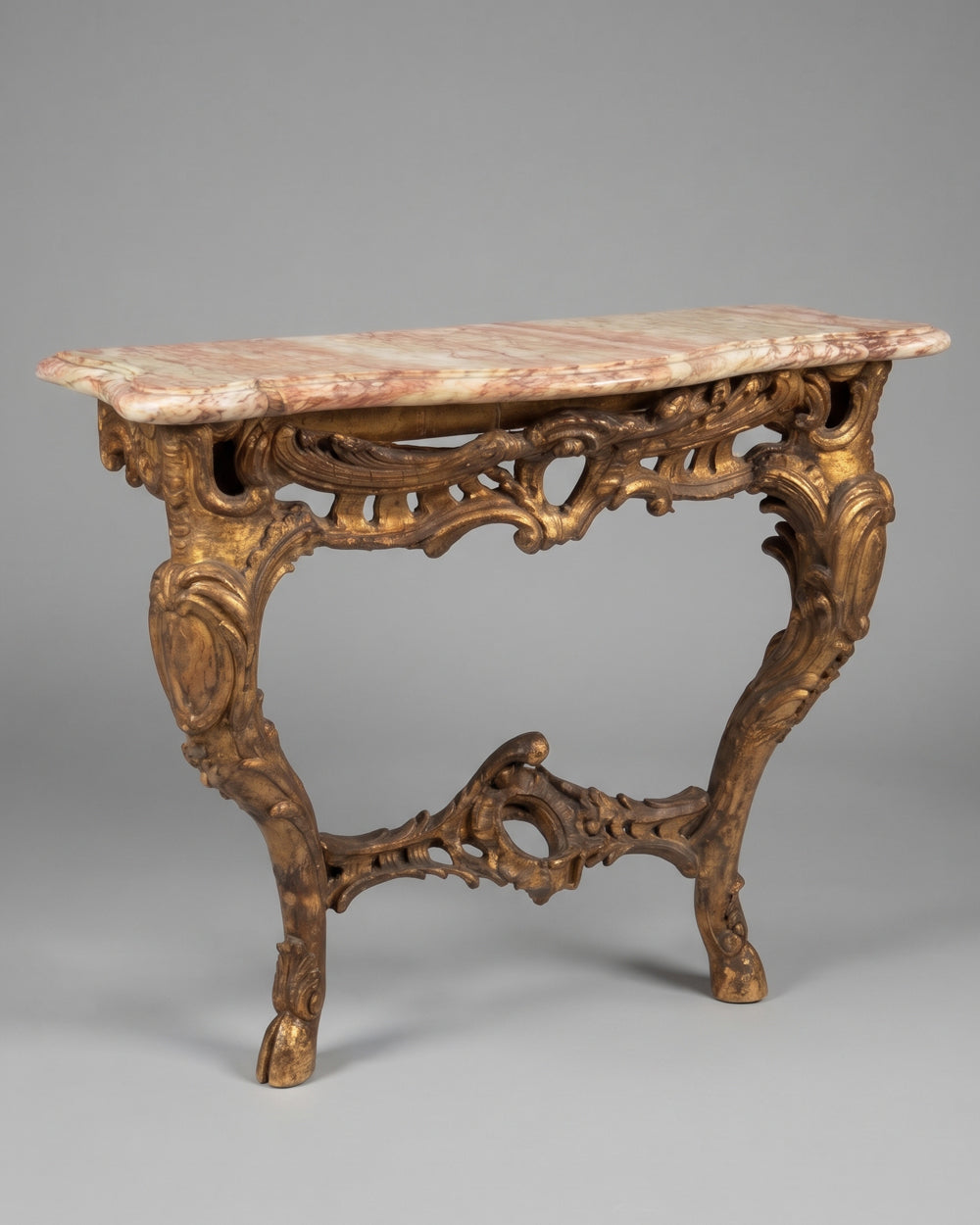
This console doesn't tiptoe into a room. She trots in on two small gilded hooves, carrying a slab of pink marble so heavy we briefly reconsidered our career choices (and our backs).
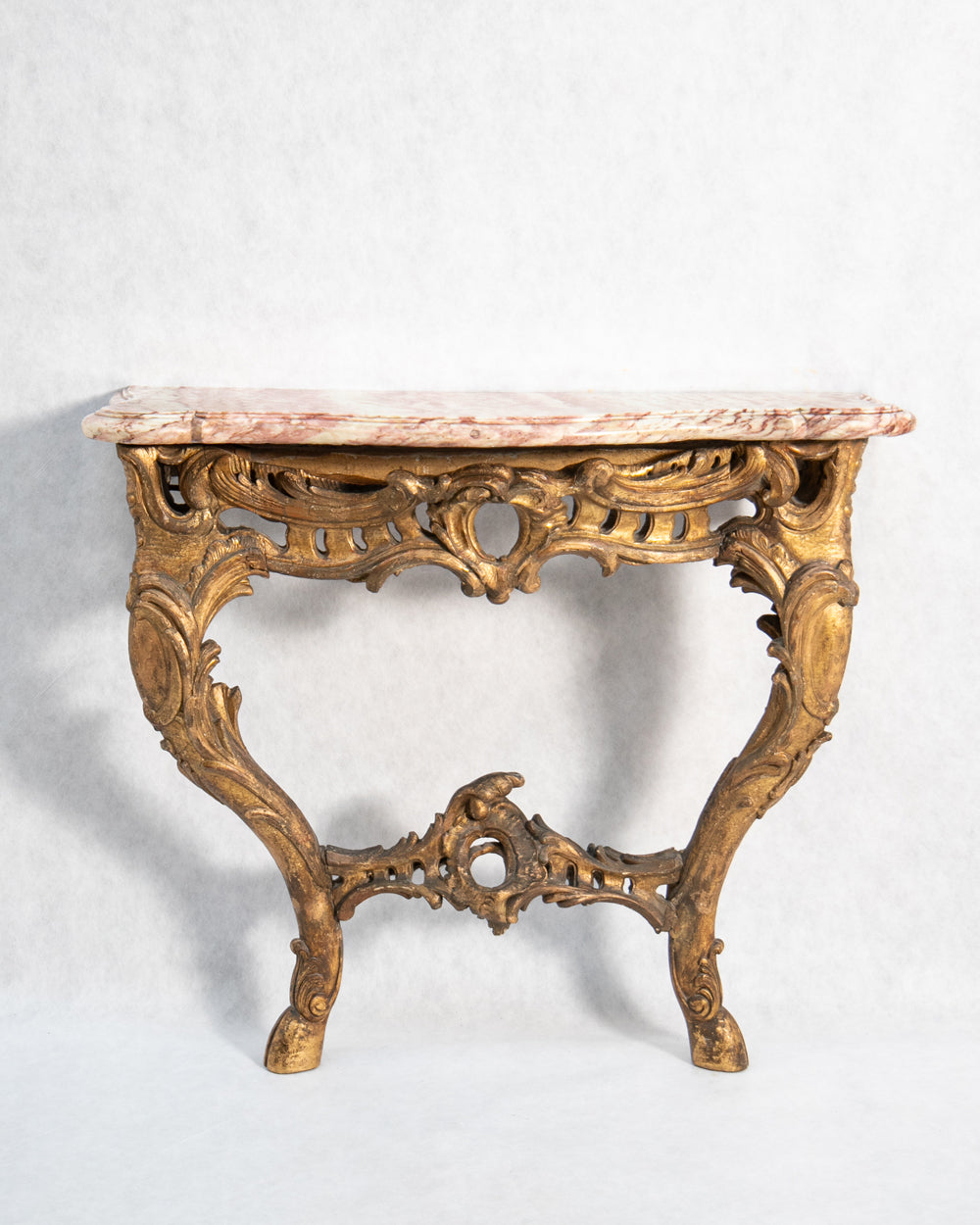
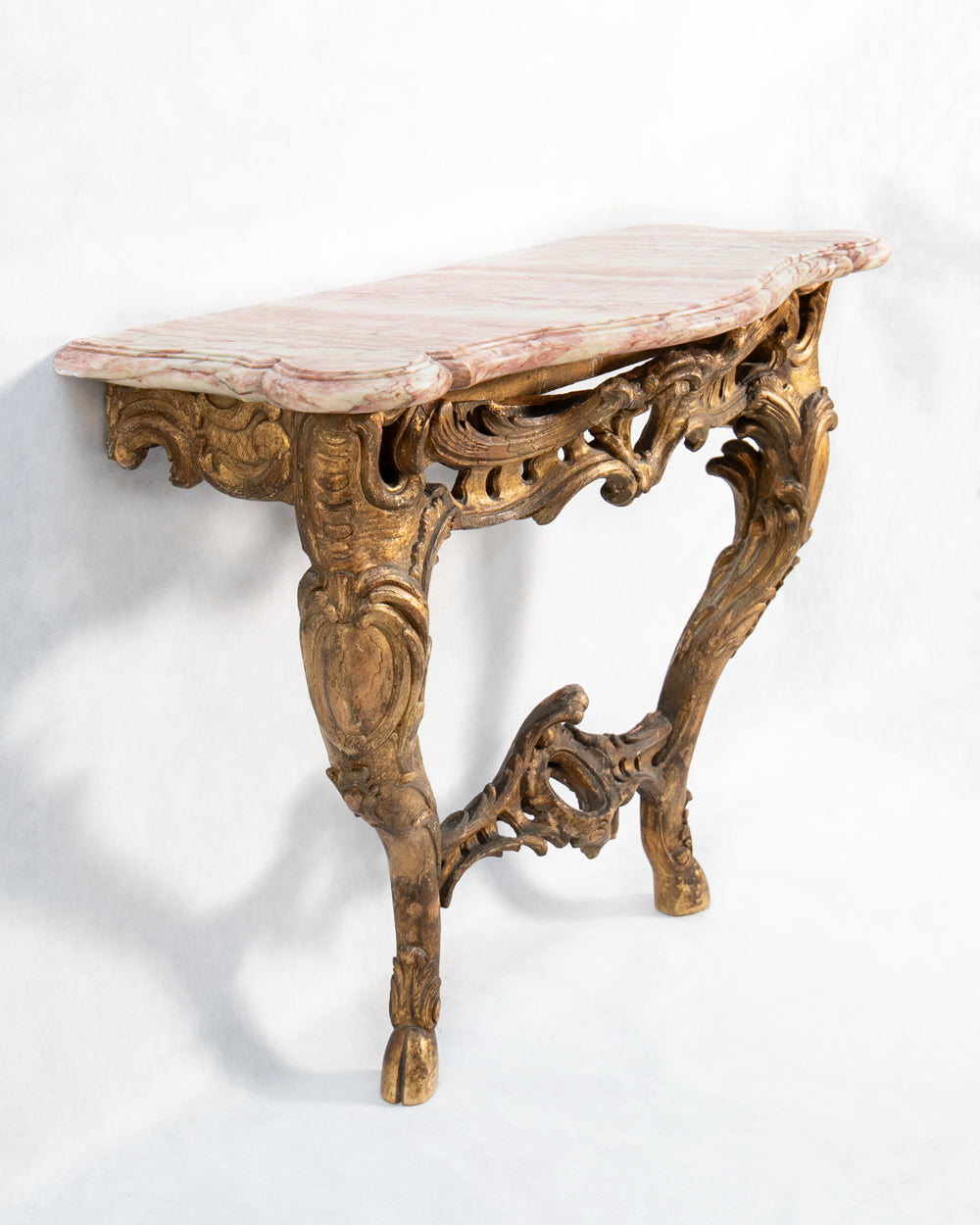
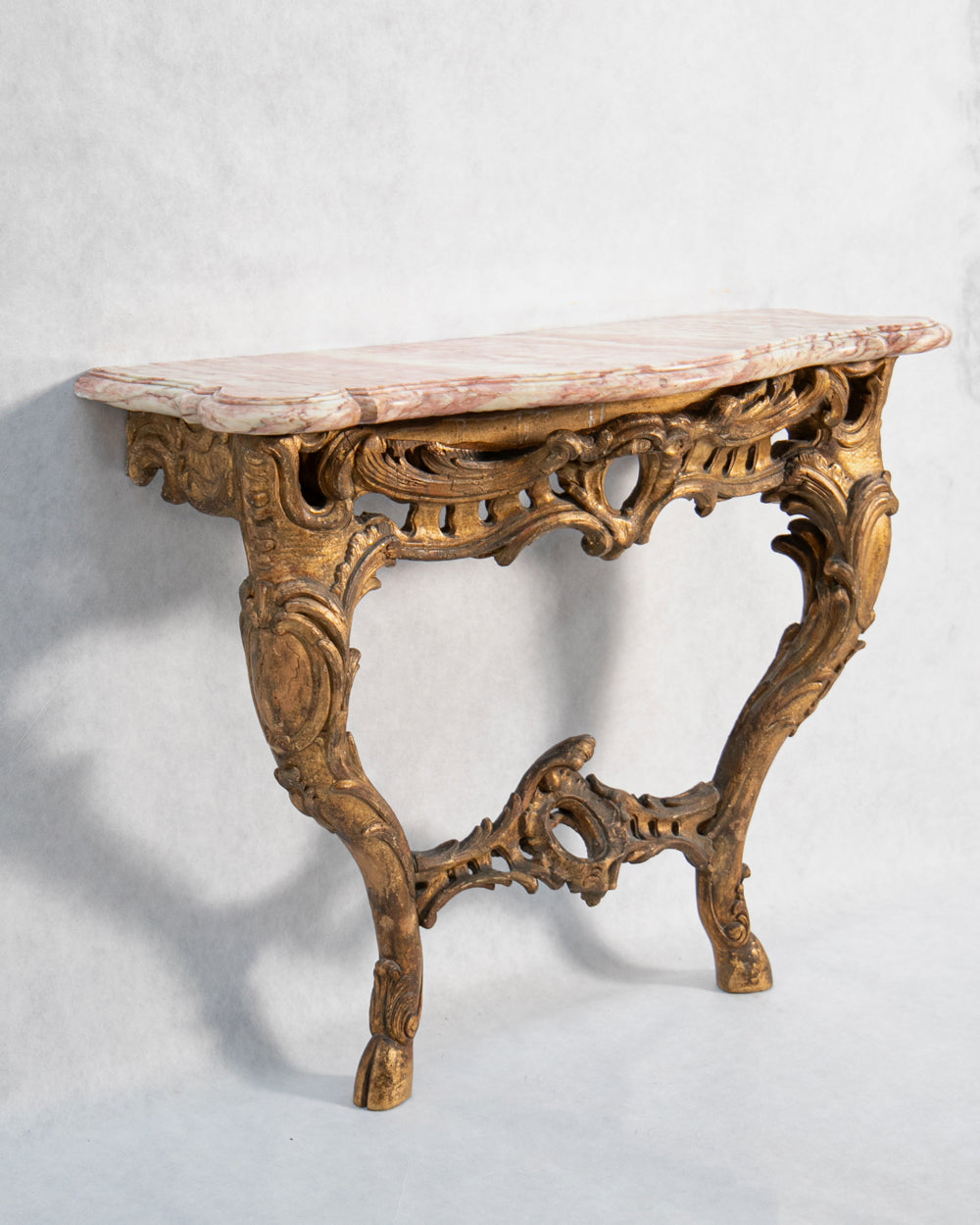
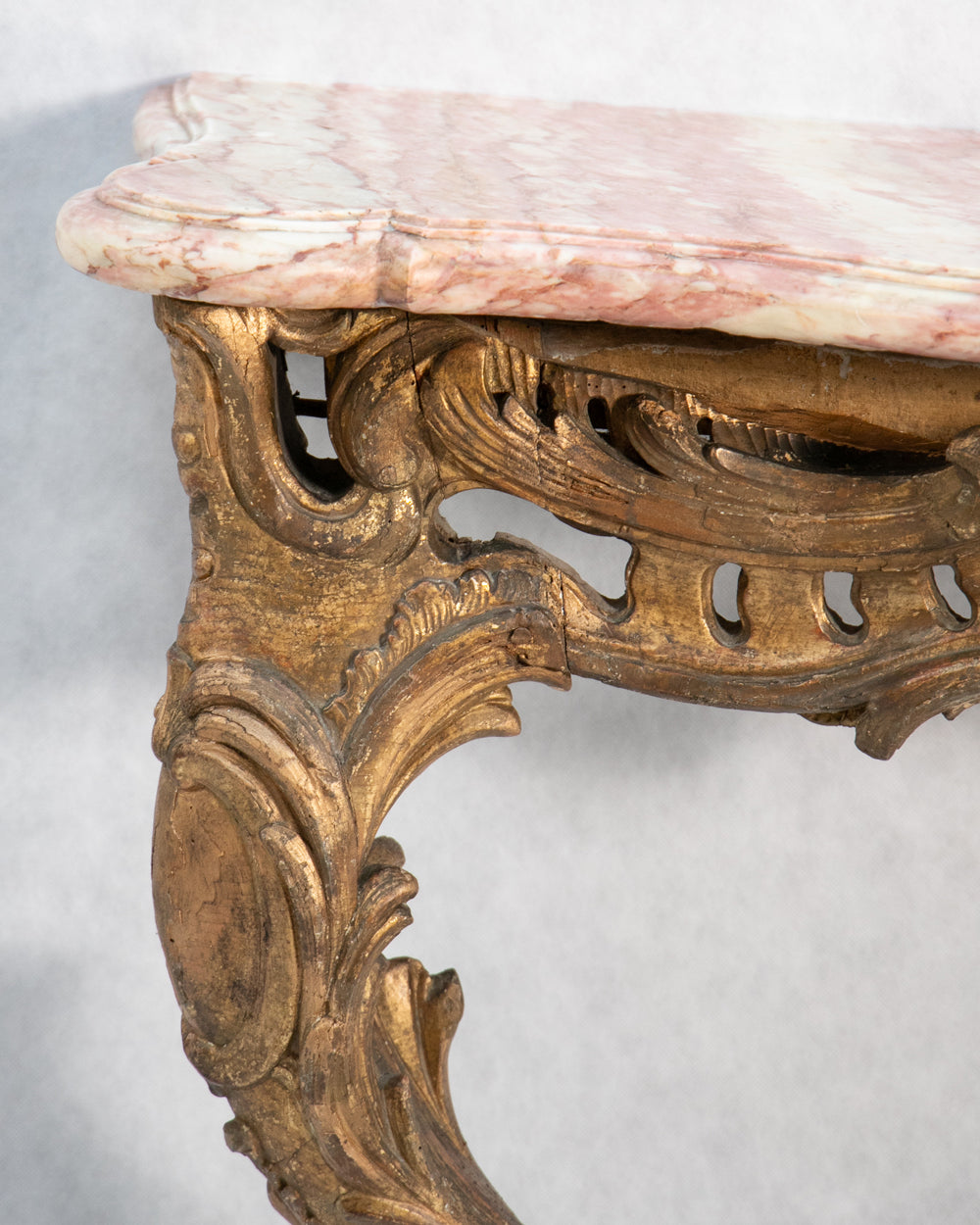
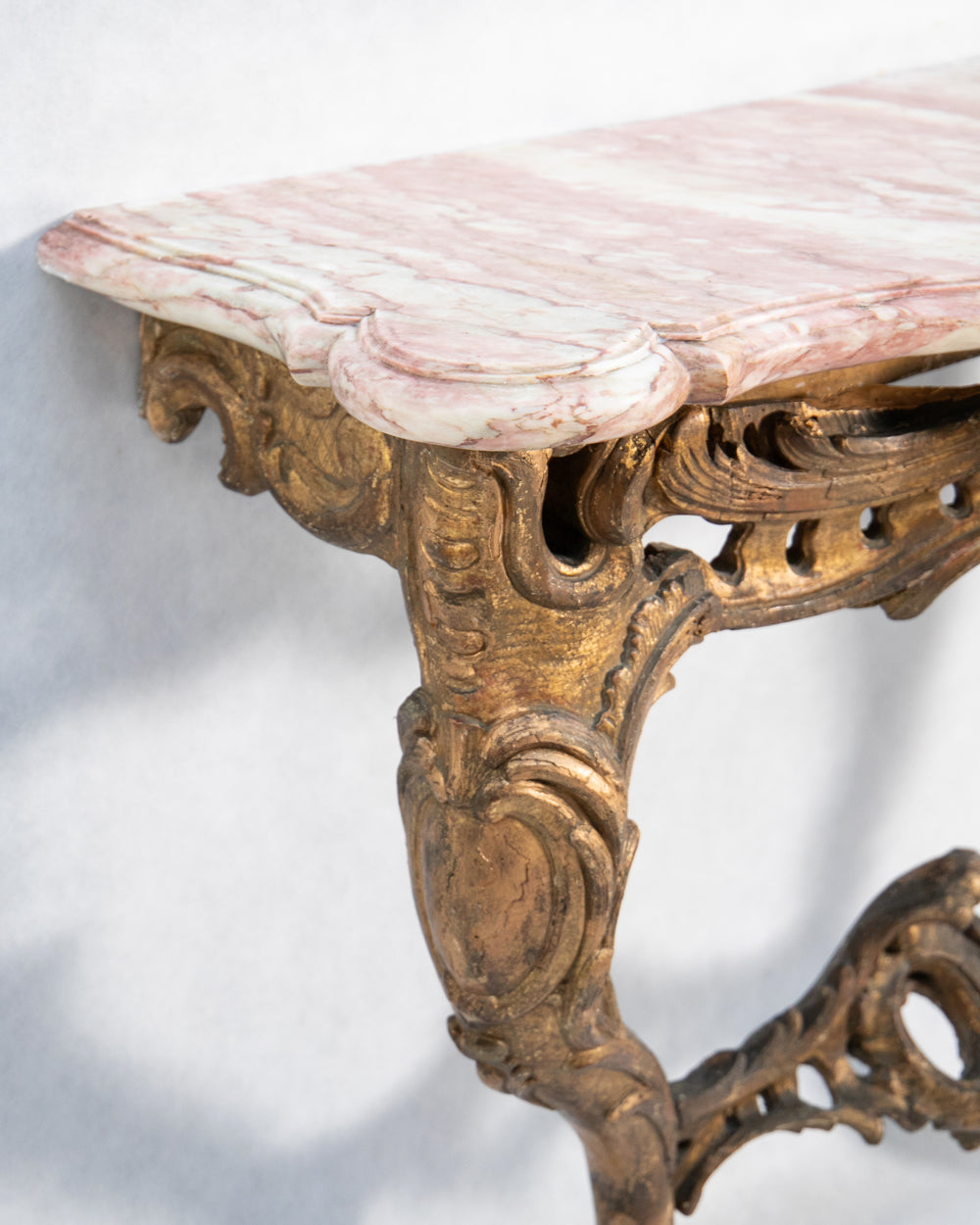
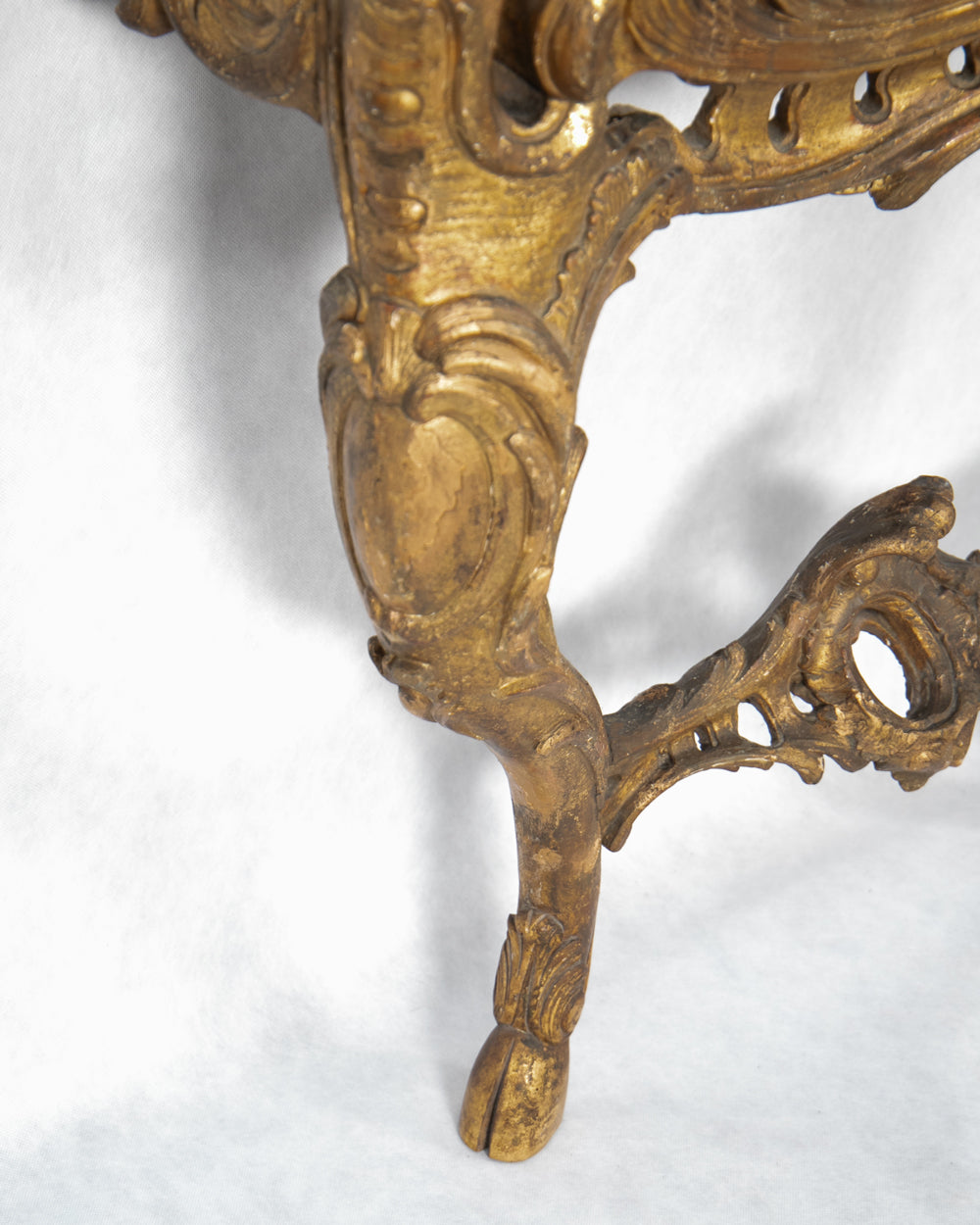
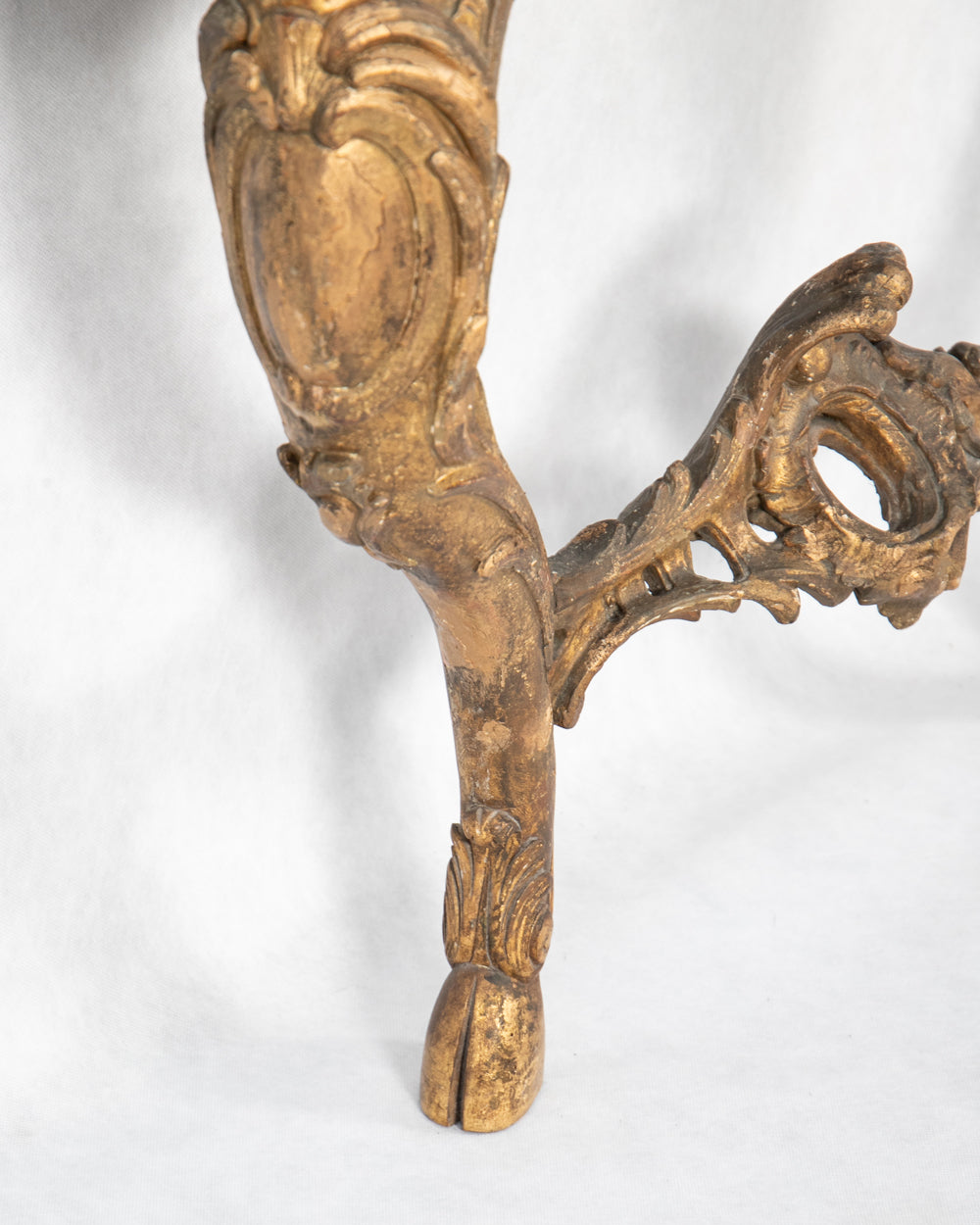
She is probably Italian, and old: early 18th century. She belongs to the earlier, earthier branch of the Rococo family. Her later Louis XV cousins are all porcelain wrists and lace cuffs. This one has shoulders. The carving is deep and confident: rocaille scrolls, curling acanthus, shield-shaped cartouches on the knees, and a pierced apron that lets the light play peekaboo. Lower down, a carved stretcher with an open oval ring ties the legs together like a gilded belt buckle. And then there are the feet. They are little hooves, the kind of detail that makes people bend down and grin.
Meaty marble
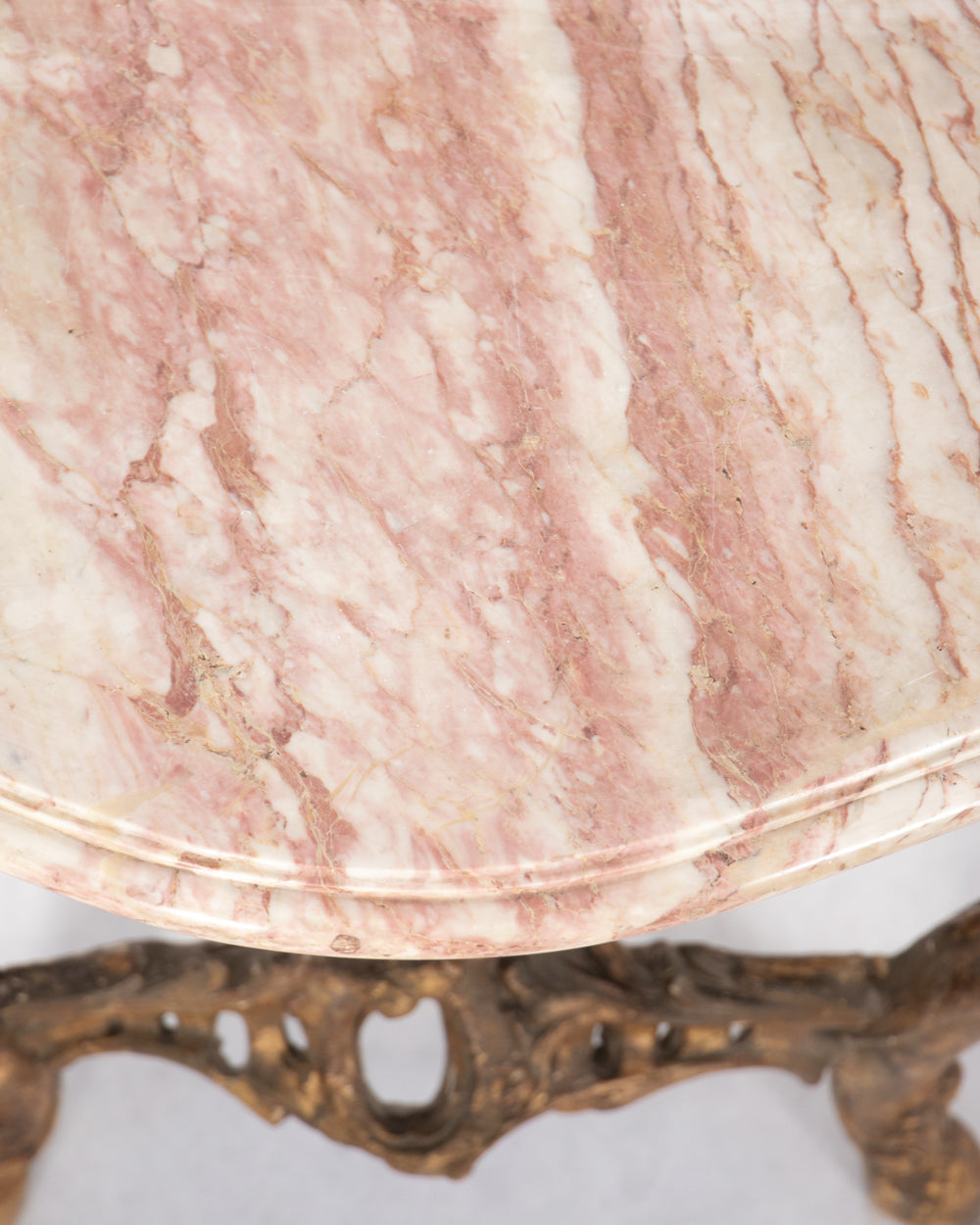
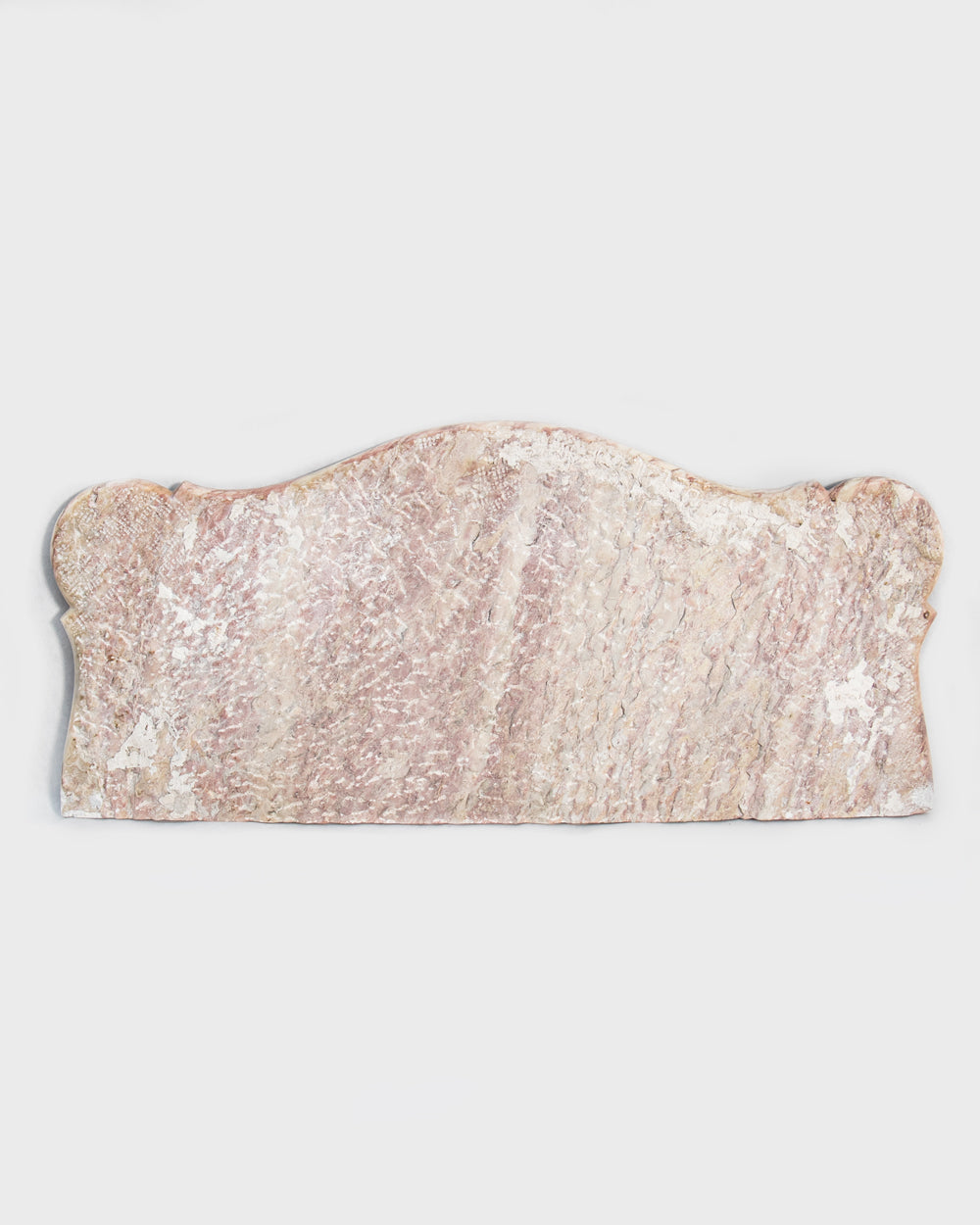
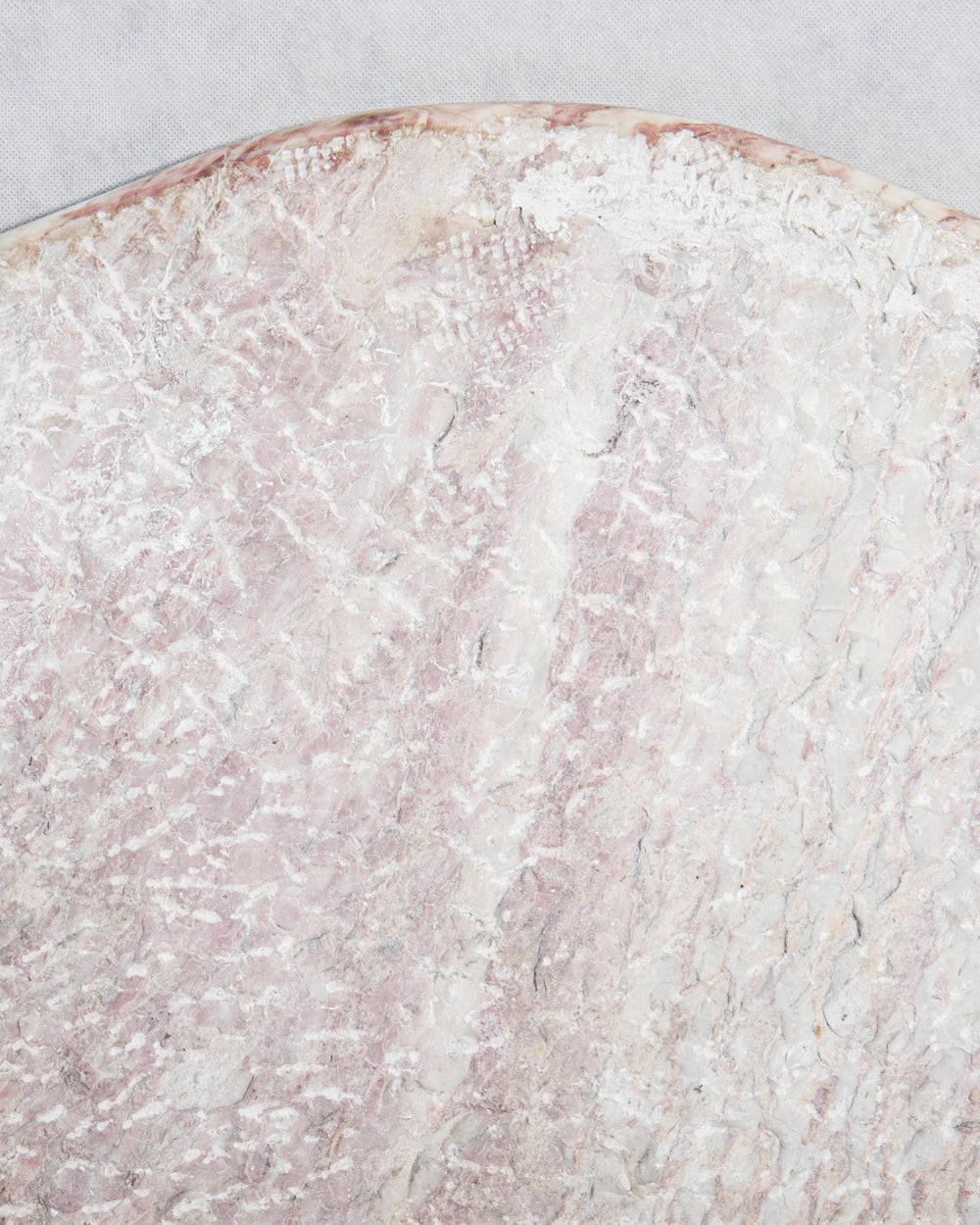
Back when this console was made, the stone was the real luxury, often worth more than the carved frame beneath it. The 18th century also had a wonderfully carnivorous way of naming its marbles. The quarries that supplied Versailles gave the world "griotte" (sour cherry), "cervelas" (yes, the sausage) and "incarnat", which simply means flesh-coloured. Clearly the marble masons worked up quite an appetite. Looking at this slab, we understand why. Pink and cream, streaked with raspberry and rust in long diagonal sweeps, she is marbled like the finest jambon. The serpentine edge is moulded with care, but turn her over and the underside tells the real story. It is rough and unpolished, still carrying the chisel marks of the person who cut it. No machine ever came near this stone. You can't fake that, and you wouldn't want to.
About those hooves
They come from a very old idea. The ancient Egyptians gave their beds and chairs legs ending in bull's hooves, and Greek and Roman tables trotted around on lion's paws and goat's legs, as if the furniture might get up and leave the room at any moment. French carvers revived the idea at the end of the 17th century with the "pied de biche", the doe's foot. It arrived together with the new cabriole leg, whose name comes from the French "cabrioler", to leap like a goat. A leaping leg deserved a proper hoof, and for a few glorious decades everything from armchairs to consoles stood on dainty cloven feet. Then fashion did what fashion does. By the 1740s the hoof had made way for the curling scroll foot, more abstract and more polite, the perfect finish for the full-blown Rococo. The hoof did make one last comeback later in the century, when Piranesi put his grand Roman tables on hooves (one of them now stands in the Rijksmuseum). On a Rococo piece like this one, though, the hooves are a lovely clue that she comes from the earlier, wilder end of the century, when furniture still had a little animal in it!
Her condition
She wears her age beautifully. In places the gilding has rubbed back to the warm red bole beneath. That glow is the giveaway of traditional water gilding, and of a few centuries of admiring hands. You'll find small losses and old cracks in the carving, exactly where you'd expect them after a few hundred years of dinner parties. Structurally she is sound and wonderfully sturdy. No wobbles, no drama (except the good kind).
Put her under a gilded mirror in the hallway and your entrance suddenly has real presence. Against a plaster or deep-painted wall, that pink marble practically glows. (Just don't put the charcuterie board on her. People will get confused.)
She is a true wall console. She stands firm on two legs and is made to be fixed to the wall.
Bellissimo? We think so. Plenty of consoles are pretty. This one has hooves, heft and a few hundred years of stories. Giddy up.
Italian Rococo Giltwood Wall Console with Pink Marble Top and Hoof Feet, Early 18th Century
TRANSPORT & DELIVERY
Homeware, textiles, candles and other smaller treasures ship at the cost shown at checkout. Free shipping in the Netherlands from €75, and in Belgium and the rest of the EU from €150. Ordering from the US? Import duties are included at checkout — no surprises at your door.
Large and fragile antiques — furniture, paintings, lighting and most mirrors — need custom shipping. Please request a shipping quote before you order, using the Request shipping quote button or by emailing info@wildschut-antiques.com. We pack everything by hand and work with transport partners specialized in arts and antiques.
In or near Amsterdam? Choose pickup at checkout and we’ll arrange a time with you. More details in our Shipping Policy and FAQs.
GENERAL CONDITION
Many of our pieces are antique or vintage, which means they come with a past. Expect the gentle marks of a long life: a knock here, a worn edge there, a patina no factory could fake. We consider that part of their charm.
We clean and restore where needed so every piece is ready for daily life, but we keep restoration to a minimum to preserve its original character. The specific condition of each piece is described above.
PHOTOGRAPHY
Our products are all photographed with care. We do our best to show colours and details accurately. Still, screens differ and daylight plays its own games, so the real colour may vary slightly from what you see online.
Some photos show a piece styled in a setting. Props and decor are for atmosphere only and not included, unless stated otherwise.
Returns
If you wish to cancel, simply contact us at info@wildschut-antiques.com or through your customer account. We will guide you through the return process with care and clarity.
Items should be returned in their original condition and securely packaged. Return shipping costs are the responsibility of the customer, unless otherwise agreed. Once the item has safely returned to us, we will process your refund promptly.
CONTACT
Questions? Don’t hesitate to contact us. We’re always happy to help, and to get your antiques safely home.
Choose options